A safer bathroom, one change at a time
The bathroom has hard floors, water and tight spaces. That's why it's the room families ask about most. Here is a simple guide to the equipment that can help.

Sit down to shower safely
If standing in the shower makes you tired or unsteady, a shower chair lets you sit while you wash. Chairs with a back and arms give more support. Stools take up less room.
If stepping over the side of the tub is the hard part, a tub transfer bench can help. It sits partly inside and partly outside the tub. You sit down outside, then slide across. A handheld shower makes it easy to wash while seated.
- Shower chairs, with or without backs and arms
- Shower stools for small spaces
- Tub transfer benches
- Handheld shower heads
Less effort to sit and stand
Many toilets are low. Sitting down and getting back up can strain your knees and hips. A raised toilet seat adds height, so you don't have to bend as far.
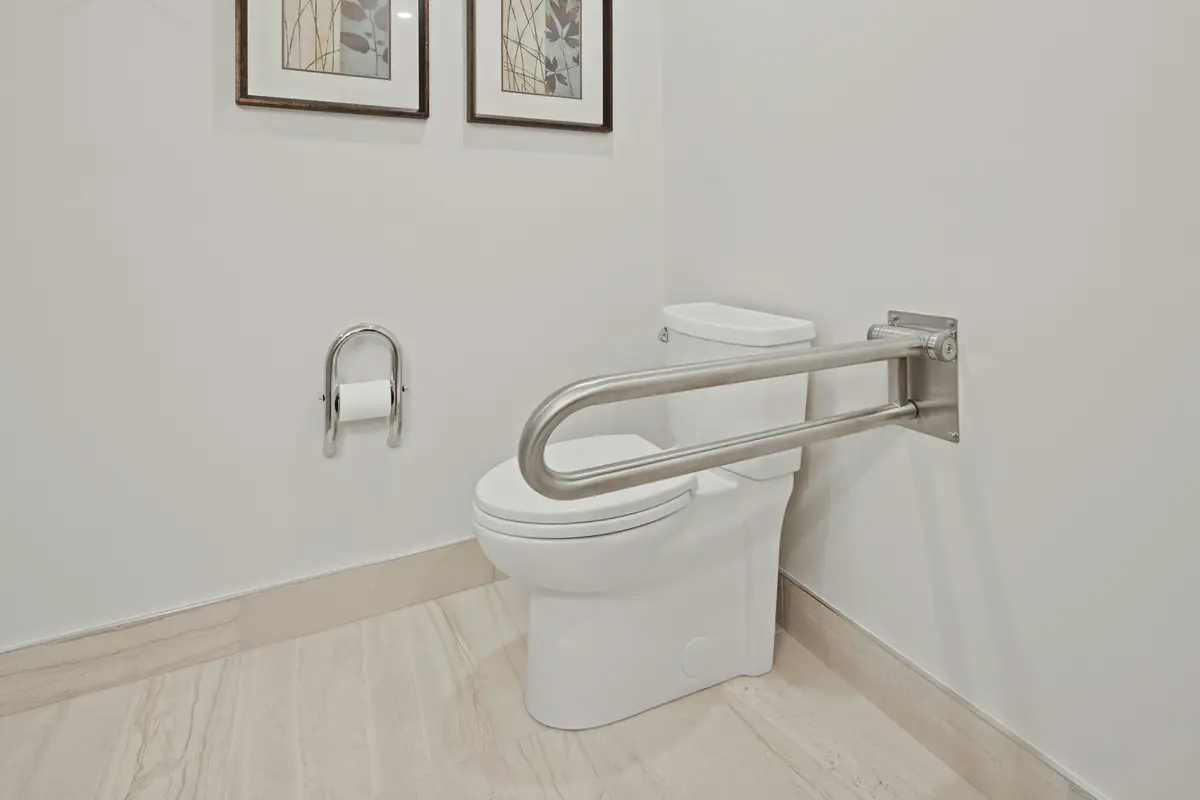
A toilet safety frame adds armrests around the toilet. You can push on the arms to stand instead of grabbing the sink or a towel bar. If the bathroom is far from the bedroom, a bedside commode can make night trips safer.
- Raised toilet seats, with or without arms
- Toilet safety frames
- Bedside commodes
- Toilet seat risers
Something solid to hold
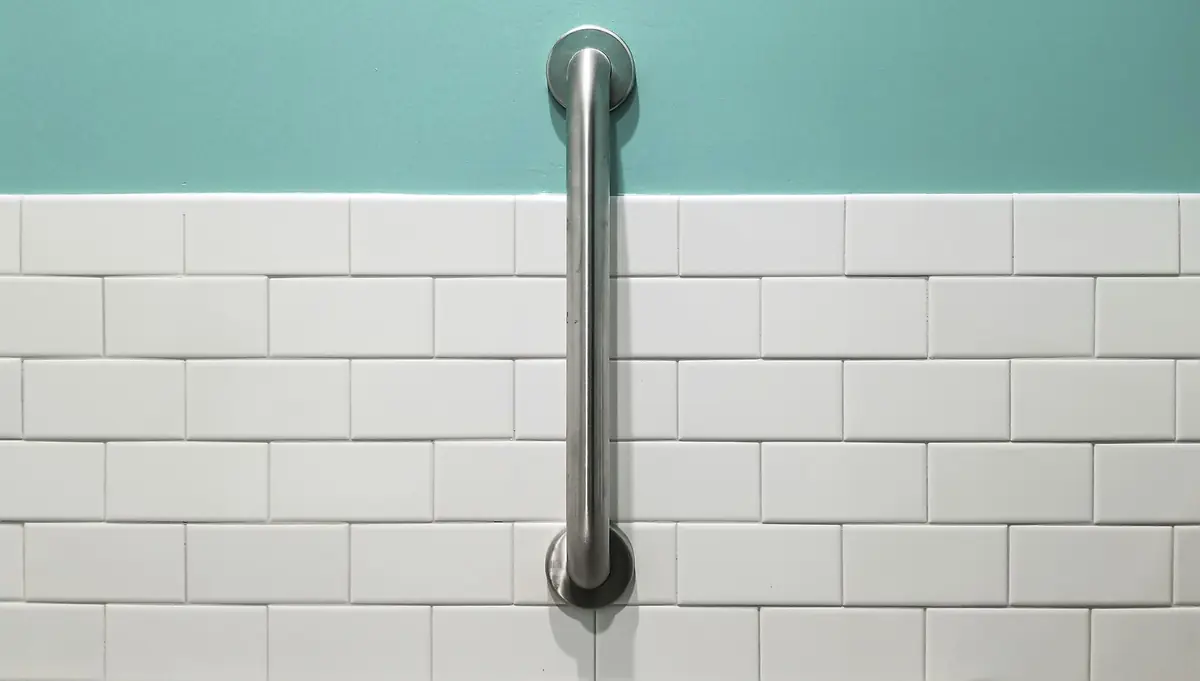
Grab bars give you a strong place to hold when you get in and out of the shower or stand up from the toilet. They must be screwed into wall studs or special anchors. Towel bars and soap dishes are not made to hold your weight.
Suction-cup bars can help with balance, but they are not meant to hold your full weight. An occupational therapist can help decide where bars should go for your height and the way you move.
- Straight bars for the shower and tub
- Angled and curved bars
- Fold-up bars beside the toilet
- Help planning where bars should go
Easy changes that help right away
Non-slip mats
Use mats with rubber backing inside and outside the tub.
Night-lights
Light the path from your bed to the bathroom.
Lever faucets
Levers are easier than knobs for sore hands.
Storage within reach
Keep towels and soap between your waist and shoulders.
Making a plan for your bathroom
You don't need to change everything at once. Start with the task that feels hardest or the spot where you have slipped or felt unsteady. For many people, that is getting in and out of the tub.
Before you call, it helps to measure a few things: the height of the tub wall, the height of the toilet seat, and the width of the bathroom door. If you use a walker or wheelchair, measure it too. These numbers help us suggest items that will fit.
Think about who else uses the bathroom. A shower chair or raised seat should work for everyone in the home, or be easy to move out of the way.
Finally, keep a phone or a personal alert button where you can reach it from the floor of the bathroom. It's a simple step that gives you and your family peace of mind.
General informationThis page is general information, not medical advice. Your doctor, nurse or occupational therapist can tell you what is safe for you.
Not sure where to begin?
Try our Bath Safety Checklist, or call us and we'll talk it through together.